Missouri HB 1726: What It Means for Weekly Door Inspections - And How Districts Can Prepare
As Missouri school leaders track the progress of HB 1726, one thing is becoming clear: exterior door security and documented weekly inspections are moving to the forefront of compliance expectations.
If you’re a superintendent, facilities director, operations leader, or school safety coordinator in Missouri, this legislation signals a shift from informal walkthroughs to structured, documented verification of door functionality.
Below is a practical breakdown of what HB 1726 emphasizes - and how districts can align their processes now.
What Is Missouri HB 1726?
HB 1726 is proposed legislation focused on strengthening physical security standards in Missouri public schools. The bill places specific emphasis on:
Exterior door security standards
Automatic closing and locking functionality
Access control integrity
Weekly inspection requirements
Documentation and reporting expectations
State oversight through the Missouri Department of Elementary and Secondary Education (DESE)
While implementation timelines and final language may evolve, the direction is clear: districts will be expected to routinely verify and document that school entry points function properly and remain secure.
The Big Shift: From “Checking Doors” to Documented Compliance
Many schools already perform routine door checks. However, HB 1726 introduces a higher standard:
Inspections must be consistent
Findings must be documented
Issues must be tracked
Compliance must be provable
In other words, it’s no longer enough to assume doors are working - districts must be able to show that they verified functionality on a weekly basis.
This transforms doors from maintenance items into regulated safety infrastructure.
What Weekly Door Sweeps Must Confirm
To align with the intent of HB 1726, weekly exterior door inspections should verify:
Doors fully close without assistance
Latches properly engage
Locking hardware functions as intended
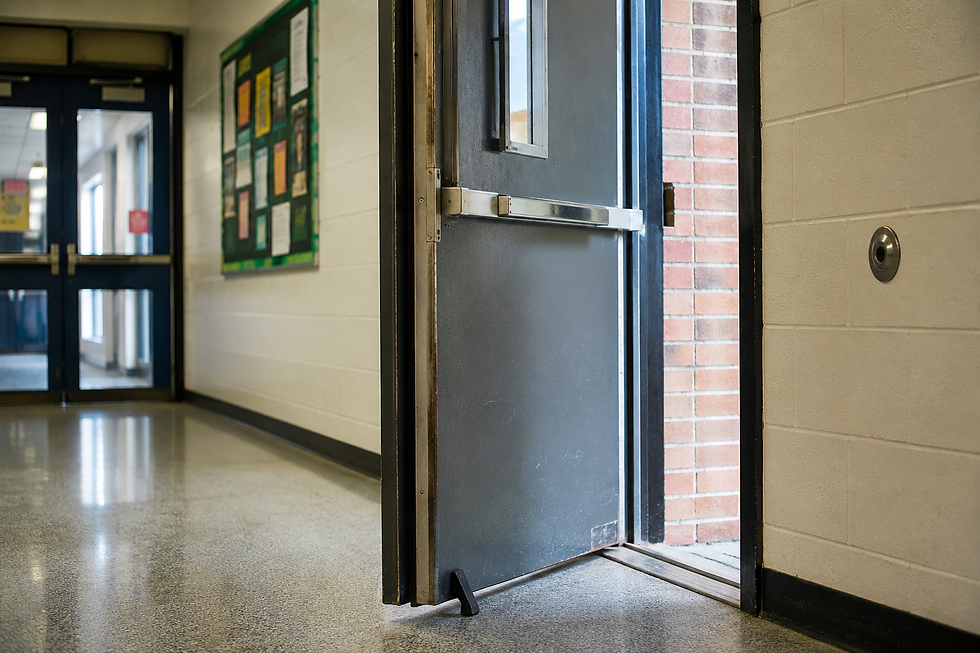
No exterior doors are propped open
Access points remain controlled
Egress remains code-compliant
Consistency and accountability are critical. Without a standardized system, inspection quality can vary widely from building to building.
How DoorProof Supports HB 1726 Compliance
DoorProof was designed around a simple principle: Entryways are life-safety assets and should be treated as such.
Here’s how DoorProof aligns directly with the weekly inspection and functionality expectations outlined in HB 1726.
1️⃣ Structured Weekly Door Sweeps
DoorProof enables districts to:
Assign recurring weekly exterior door inspections
Standardize inspection criteria across buildings
Log each door individually
Capture timestamped verification records
This ensures inspections are not informal walkthroughs, but documented safety procedures.
2️⃣ Integrity of Door Functionality
HB 1726 focuses on operational integrity - not just whether a door exists.
DoorProof helps verify:
Latch engagement
Lock functionality
Observable hardware issues
Each inspection creates a digital record that confirms doors are functioning properly at the time of review.
If an issue is identified, it can be flagged immediately rather than discovered after a failure.
3️⃣ Accountability & Culture Shift
One of the most common school security failures nationwide is exterior door propping.
When inspections are:
Scheduled
Assigned
Logged
Reviewed
Behavior changes.
DoorProof creates transparency and accountability, helping districts reinforce the expectation that doors remain secured and operational.
4️⃣ Centralized Documentation for Oversight
With potential compliance reporting tied to DESE oversight, documentation becomes critical.
DoorProof provides:
Exportable inspection logs
Historical verification records
Administrative dashboards
Clear evidence of recurring compliance
If districts are ever asked to demonstrate adherence to weekly inspection standards, they can do so confidently.
Why Missouri Districts Should Act Now
Legislation sets deadlines.
Systems take time to implement.
Districts that formalize weekly door inspection processes now will:
✔ Reduce compliance risk
✔ Prevent hardware failures from going unnoticed
✔ Strengthen overall school safety culture
✔ Avoid reactive scrambling as implementation timelines approach
✔ Demonstrate proactive leadership
HB 1726 reinforces a broader truth:
School safety is operational. It lives in the consistency of weekly actions - not just in written policy.
Final Thought
As Missouri administrators search for guidance on HB 1726, the core question is simple:
Are your exterior doors functioning properly - and can you prove that they were verified this week?